
Volunteering in Paris 2024
Paris 2024 welcomed over 10,500 athletes from more than 200 nations between the 26th July and the 11th August, 2024. There were 32 sports across 35 venues, and over 45,000 volunteers.
While the news media concentrated on a number of controversies, at the Games, the reality seemed very different, and Paris delivered an exceptional Olympic Games.
I was very fortunate to support the Tonga Olympic Team from the Pacific Islands, for a third time, providing physiotherapy and osteopathy treatment and care to the athletes, coaches, and entourage.
Getting to Paris
Like many in Team GB, we jumped on a short Eurostar train journey direct from London St Pancras to Gare du Nord, Paris. Despite prices being inflated, due to demand, the short journey of just two and a half hours meant being in Paris by lunchtime. Getting to the venue can be tricky, and without transport or accreditation, I was luckily put into an electric Olympic vehicle to get me to the Olympic Village in St Denis, North Paris. Arriving and getting accreditation can be problematic, but this time things went smoothly, and I was checked in to room share with the Fiji rugby sevens in the Australia Block as accommodation and rooms were very limited.
Typical Day
As healthcare practitioners, we’re always first up, usually around 7am. I was supporting four athletes: 2 swimmers, 1 track athlete, and 1 boxer. The swimmers and track athlete always wanted to train early, so I was either at the newly built pool inside a stadium, or I was at the training track. After training, we would head for a late breakfast or early lunch, and then in the afternoon would typically be gym sessions or providing treatment to the athletes and team. In the evening, we would head for dinner, and after food I would either do more treatment/rehab on the athletes, or go to the gym with them, or walk or jog with them. The evenings were warm and it made the 3km perimeter walk very pleasant. Bed time was usually between 11pm and 1am.
My role encompassed many things – from hands-on therapy, to chaperoning, bag carrying, cleaning (7 rooms had to be deep cleaned and sanitised due to COVID), photography, meet and greet, gym training, and mental health support.
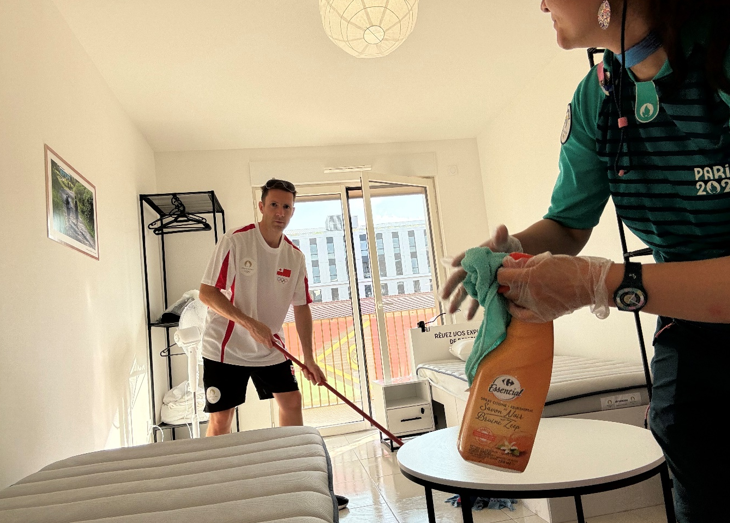
Village Life
Like other Olympic Villages, there was a post-office, salon, convenience store, and a souvenir shop that was much more expensive than previous games. There was a games and chill out room, with lots of retro arcade machines, pinball, big screen and table football. There was a bar, serving alcohol-free beer, a space for yoga, and of course the polyclinic located in an impressive building.
The food hall was massive, a converted factory or something similar, and it served 40,000 meals per day! Athletes spend a lot of time in there, often on their phones, using the Olympics to super-charge their social media following. This was always a good time to catch up on emails and deal with the “stuff we leave behind during our normal work”.
Apart from the impressive food hall and polyclinic, the gym was incredible and fantastic – filled with over 2 million euros of Technogym equipment across two floors, with saunas, body fat analysers, cardio equipment, stretching area, bulky weight machines, meditation and chill out area, and stretching area. Many hours were spent here supporting athletes or working out.
Medical Provision
The fully-staffed and impressive polyclinic provided services such as dentistry, ophthalmology, glasses repair, urgent care, physiotherapy osteopathy and chiropractic, MRI and imaging, psychological services, and orthopaedics. Some services were restricted only to athletes. The polyclinic also ran daily lectures each afternoon on various topics. A 3-hour webinar and seminar “medical briefing” was provided at the start of the Games to all medical teams from all NOCs.
All the larger NOCs brought their own medical teams, including doctors and physiotherapists. The smaller teams, with less accredited spaces, often brought less medical support, and in our case, we did not have a medical doctor in the team. However, a lot of Pacific islands shared medical services together. Notably the Swiss team brought along osteopath David Lewis.
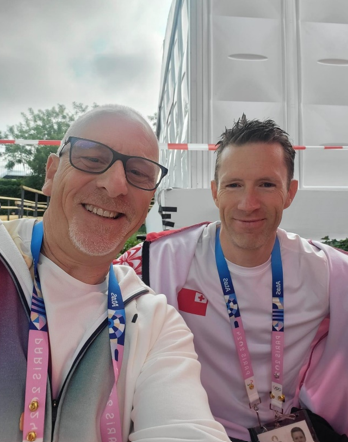
Osteopath David Lewis with Tim
Competition
Competition day is often nerve-racking. There’s a lot of pressure. Competition day always feels different to other days. People, coaches, athletes and staff all conduct themselves differently. There’s added tension, and communication gets limited.
Being medical support at the Olympics allowed us access to the competition venues where our athletes would be competing. This provided a unique experience. For myself, this included being ringside at a boxing event, being trackside at the 100m athletics, and being pool-side for the swimming events.
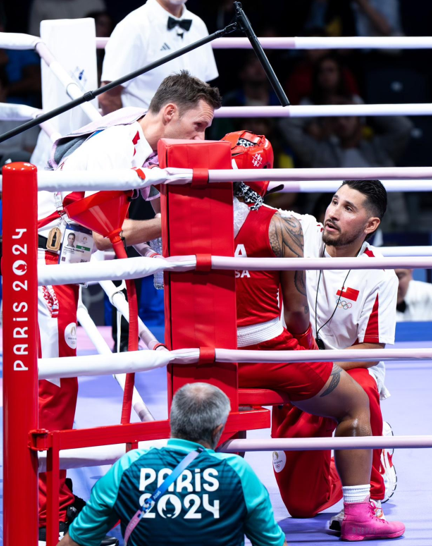
While my team were not expected to win any medals, the opposite was more important. That included qualifying, showing up, representing, and putting their country on the map. This would be to inspire more sport and exercise in their nation, and to motivate and inspire.
Learnings from the Games
The experience was incredible, and the team I looked after were absolutely lovely. I felt like they could not do enough to support me, in my role.
Thank you to Paris 2024, the IOC, and the NOC who provided an incredible experience for all involved.
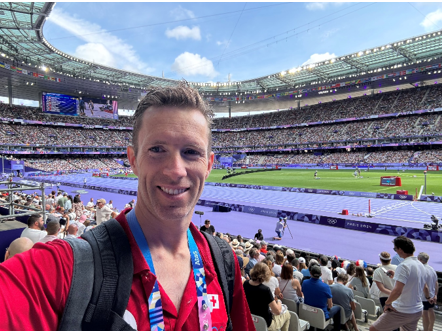
Tim Allardyce